OVERARCHING VISION
My historical research analyzes the entanglement of knowledge, politics, and diplomacy, highlighting the geopolitical significance of science, technology, and media. My work focuses on the second half of the twentieth century and is guided by two core interests: Infrastructures. At the heart of my work is the reciprocal relationship between global knowledge movements and local institutions. I focus on artifacts and technical systems as the building blocks of international order. Agencies. I examine the actors and practices that drive the exchange of knowledge, materials, and resources across borders, including those operating outside traditional diplomatic channels.
I’m currently working on these themes:
1 THE DEVELOPMENT OF DATA SHARING, c. 1972-1991
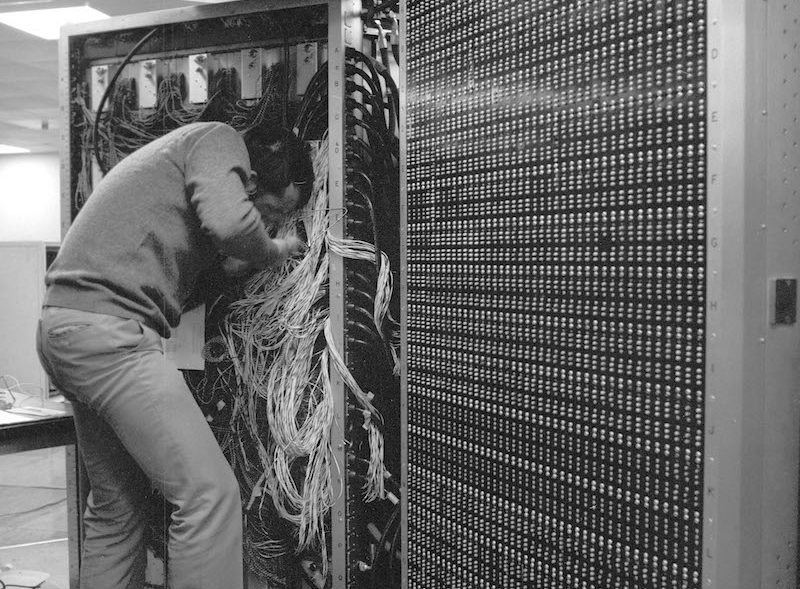
This ongoing project—the foundation of a second book—integrates several distinct threads of media and tech history to interrogate the mechanisms of international data sharing. As part of a team effort funded by the Swiss National Science Foundation, I analyze how computers changed research in physics and reshaped public communication networks.
By unearthing archival materials from the dawn of computer networking in the 1970s, my research traces the early emergence of international structural inequalities. This work provides a vital prehistory of the World Wide Web as developed at CERN and aims to reconstruct the infrastructural origins and techno-diplomatic implications of what we now recognize as the digital divide.
2 HISTORY OF FUSION
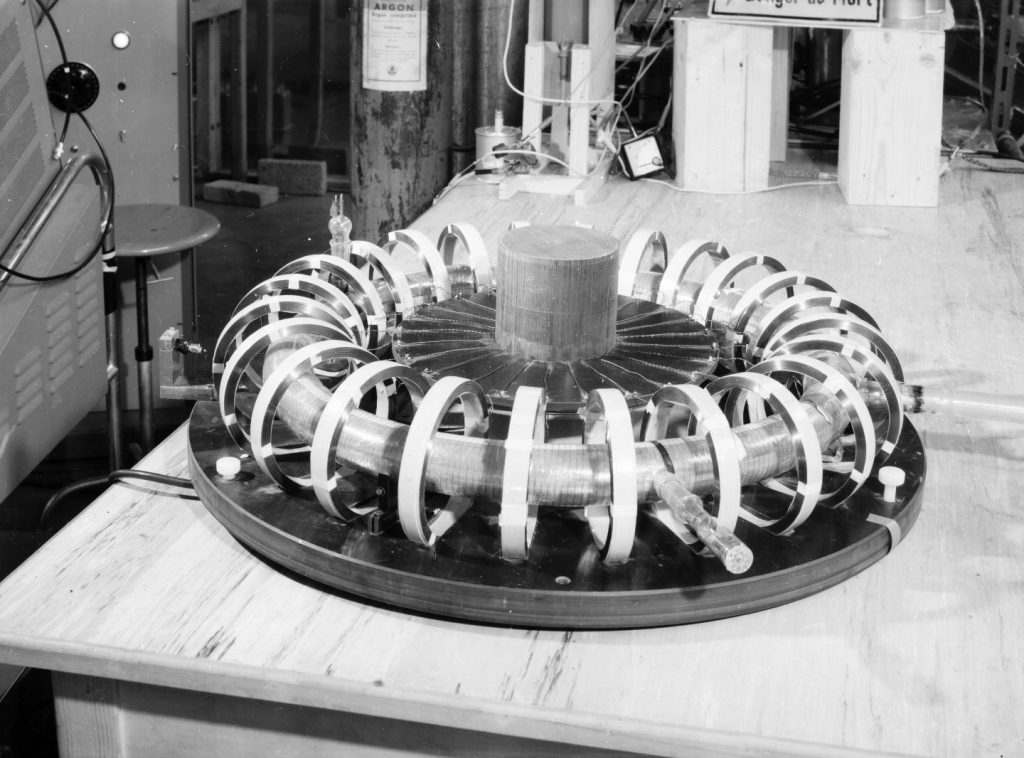
My research also extends into the history of energy, specifically focusing on the decades-long pursuit of thermonuclear fusion. Although a viable reactor remains a future prospect, I argue that fusion should not be dismissed as a failed vision. Instead, it serves as a compelling case study of the inherent unpredictability of technological progress and the persistence of goal-oriented research.
Fusion also represents a legacy of late Cold War megascience, where massive experimental scaling became inextricably linked with international collaboration. A key outcome of this work—focusing on CERN’s role in fusion—was recently featured as a spotlight in the American Institute of Physics weekly news; see [here].
3 NON-STATE ACTORS IN INTERNATIONAL SCIENCE AND TECHNOLOGY
Alongside well-known examples like the Pugwash Conferences on nuclear disarmament, informal diplomatic encounters represent a significant dimension of the history of science and technology that merits further reflection. I explore Science for Vietnam and related grassroots movements to reveal how solidarity-based research emerged as a form of politics from below. These activists sought to produce knowledge to address the severe impacts of military technology. This project is expanded by a new initiative rooted in the conviction that integrating diverse international perspectives is essential to establishing a more robust analytical foundation for this under-explored theme.
FORTHCOMING BOOK: Nuclear Training in Cold War Geopolitics: Coaching Atoms across Nations
My first book is under contract with Oxford University Press as part of the new series Science and Technology in International Affairs. The book offers insights into the history of knowledge sharing and the mechanisms governing the international movement of nuclear materials and trainees during the first two decades of the Cold War.
By shifting the analytical lens from state-to-state diplomacy to the granular level of laboratory exchanges between the United States and Western Europe, “Coaching Atoms” redefines the geopolitical narrative of the era. It demonstrates how massive funding for nuclear technoscience transformed the demand for specialized knowledge, showing how access to training programs became a powerful tool in international affairs. More details soon!
BEYOND INDIVIDUAL RESEARCH…
I also collaborate on three international research projects: the first is on the history of fusion research in Europe, where I contribute data to a quantitative analysis (2023–2026; PI Roberto Lalli). The second focuses on diversity in the history of science, where I serve as an external advisor (2024–2026; PI Climério Silva Neto). The third explores science and democracy, developing international perspectives on their intersection (2025–2030; PI João Carlos Salles).
EXPERTISE
- Science, Technology and Media from the mid-20th Century to the Present
- History of Transnational Data Exchange Infrastructures, Computing, Satellites
- History of the International Organizations CERN, OECD, IAEA
- Techno-Diplomacy, Non-State Actors in International Affairs